Blog
Commercial Air Duct Cleaning: Key Signs Your System Needs It
Air duct cleaning service: when to schedule one and what to expect
An air duct cleaning service can materially improve indoor comfort and perceived air quality in commercial buildings, but it should not be booked on a hunch. Recognising the clear warning signs — and understanding what a professional clean will and will not fix — helps you plan with minimal disruption and avoid unnecessary works.
What an air duct cleaning service involves in commercial settings
In commercial buildings, duct cleaning is a planned hygiene intervention to remove accumulated dust, debris and microbial growth from supply and extract ductwork. The scope commonly includes grilles, diffusers, internal duct surfaces and, where agreed, components within air handling units.
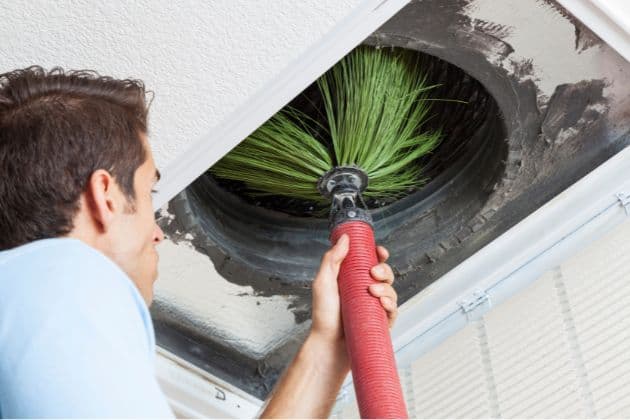
Specialist contractors use mechanical brushing and negative-pressure vacuum systems, often supported by compressed-air tools for stubborn deposits. The objective is to restore a clean internal surface, protect indoor air quality and allow the HVAC system to perform closer to its original design. Works are usually informed by risk assessments, insurance requirements and guidance such as TR19, and should form part of a broader HVAC maintenance strategy rather than a one-off reaction to complaints.
Clear signs your ductwork may need cleaning
Some indicators are obvious; others become obvious only through regular inspections and occupant feedback. If you spot several of the signs below, arrange a professional survey to confirm whether cleaning is required.
Persistent dust reappearing after routine cleaning
If desks, shelving and equipment gather fine dust shortly after cleaning, the ventilation system may be redistributing particles from the ductwork. Check supply and extract grilles for grey deposits, clumps of dust or fibrous material. Visible deposits on the frame or diffuser blades often indicate a wider build up inside the ducts. A contractor can verify this by opening access panels or using a camera inspection.
Musty or stale odours when systems start
Stale, musty or damp smells on start-up or at higher fan speeds can point to contaminated ducts, dirty coils or standing water around air handling units. If odours are localised to particular zones, the issue may be within branch ductwork serving that area. Log comfort complaints such as stuffiness, headaches or eye and throat irritation; trends by floor or area help prioritise inspections and targeted cleaning.
Uneven airflow, cold or hot spots
Blocked or heavily fouled duct sections can cause uneven airflow, leaving some rooms undersupplied while others are comfortable. You might notice diffusers in certain areas barely moving air compared with neighbouring outlets. Bear in mind reduced airflow is not always due to cleanliness: damper positions, fan performance, system design and controls must also be checked. Cleaning can remove friction losses from deposits, but it will not correct an undersized or poorly balanced system.
Allergy complaints, refurbishment dust and visible moisture or mould
Multiple occupants reporting worsening asthma symptoms, hay fever-type reactions or general respiratory irritation should trigger a review of filtration, fresh-air rates and duct condition. After internal refurbishments, fit-outs or ceiling works, construction dust can enter open ducts or grilles; where temporary protection was not used, a post-project inspection and clean is often justified. Visible mould, staining or condensation marks on or near ducting must be investigated urgently — cleaning alone will not prevent recurrence unless the moisture source (poor insulation, leaks or incorrect controls) is addressed.
What duct cleaning can and cannot achieve
A thorough professional clean can reduce recirculated dust, remove settled fibrous materials and accessible microbial growth, and in some cases marginally improve airflow where deposits were restricting cross-sectional area or blocking components such as coils or filters. It supports better perceived air quality and system hygiene when combined with appropriate follow-up measures.
However, duct cleaning will not fix undersized plant, poor zoning, failing fans, incorrect controls or inadequate fresh-air provision. Lasting improvement requires integrating cleaning with correct filter selection, regular filter changes and checks that ventilation rates match occupancy. Without those measures, ducts will re-accumulate contamination and complaints are likely to return.
Integrating duct cleaning with filtration and ventilation management
Facilities managers get the best value when duct cleaning is part of a broader HVAC programme. This typically includes simultaneous inspection of air handling units, fans, coils and dampers, plus a review of filter grades and change frequencies based on building use and local outdoor air quality. Any proposed filter upgrades must be engineered so that additional pressure drop does not exceed fan capacity and introduce new airflow issues.
Ventilation rates — including outdoor air volumes and distribution — should be verified and set correctly. Cleaning dirty ducts while leaving insufficient fresh-air rates or an imbalanced system untouched will not deliver the indoor air quality or occupant comfort you need.
Questions to ask your air duct cleaning contractor
Use a structured set of questions to select a competent contractor and clarify scope, responsibilities and evidence of outcomes:
- Method statement: Ask for written methods referencing relevant industry guidance and how access, cleaning and validation will be carried out.
- Access points: Confirm how many new access doors or panels will be installed, their locations and how these will be sealed and labelled afterwards.
- Containment and protection: Check how dust will be contained, how areas below work will be protected and how contamination of occupied zones will be prevented.
- Before-and-after evidence: Request photographic evidence, cleanliness test results or a report to demonstrate due diligence.
- Waste disposal and disruption: Confirm how waste will be removed, working hours, expected noise and plans to keep disruption minimal. For occupied offices, schools, healthcare or retail environments, agree a phasing plan so work happens outside critical operating times wherever possible.
Planning next steps
If you see several of the signs above or are planning refurbishment works, arrange a professional review that can include condition surveys, hygiene assessments and checks of ventilation rates and filtration. Where necessary, cleaning should be combined with remedial work to address moisture, balancing or plant performance.
AGG Kent Limited supports commercial clients across Maidstone, Gravesend, Ashford and the wider region with air duct cleaning and wider HVAC services. Explore our Air Conditioning services and structured Preventative Maintenance Plans to see how duct hygiene can fit into a planned maintenance regime. To discuss your building or arrange a survey, contact AGG Kent or call 0775 448 7344.
Other Articles


