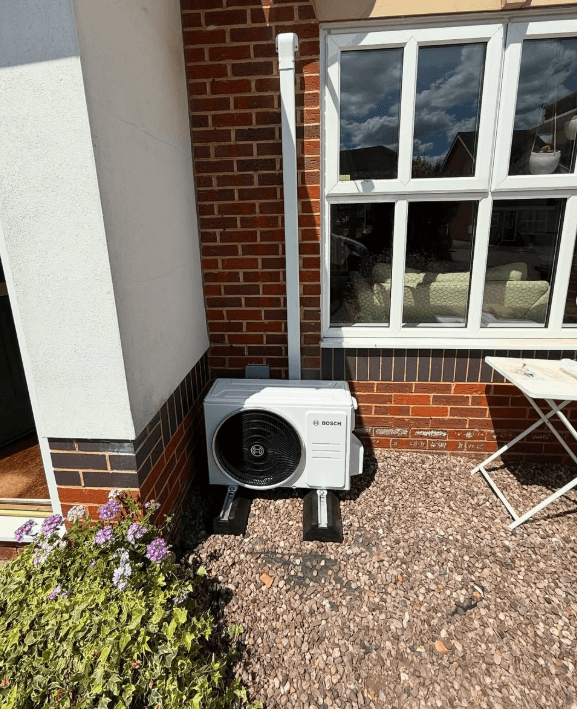
What normal winter frost and defrosting look like on an air source heat pump, and the signs that ice means a fault.
Blog
Why is my heat pump icing up in cold weather?
AGG Kent Limited
A light layer of frost on an air source heat pump in cold, damp weather is normal. The unit is pulling heat out of very cold air, so moisture in that air freezes on its fins. Every so often it runs a defrost cycle to melt the ice, and the cloud you see rising from it is steam, not smoke. Thick ice that doesn't clear, or ice building up around the base, is different. That usually points to a drainage, airflow or system fault that needs an engineer.
This post explains why heat pumps frost up, what a normal defrost looks like, the signs that something is wrong, the safe checks you or your site team can make, and what an engineer looks at. It applies to air source heat pumps on homes and on commercial buildings. Never open the casing of the outdoor unit. It contains electrical parts and refrigerant, which only a qualified, F-Gas certified engineer should work on.
Why heat pumps frost up
An air source heat pump works like a fridge in reverse. Its outdoor coil, the block of thin metal fins on the back or side of the unit, runs colder than the air around it so it can absorb heat. When the outside temperature is around freezing and the air is damp, as it often is on the Kent coast in winter, moisture in the air freezes onto those fins.
A thin, even layer of frost is the system working as designed. The trouble starts only if the ice builds up faster than the unit can clear it, because ice blocks the airflow the heat pump needs.
What a normal defrost cycle looks like
Heat pumps clear frost automatically. During a defrost cycle:
the fan slows or stops
the sound of the unit changes, sometimes with a hiss or a click as valves switch over
steam rises from the coil as the ice melts
water drips from the base of the unit
indoors, the heating may pause briefly
A defrost usually takes a few minutes, and on a cold, damp day it may happen several times an hour. Afterwards the fins should be clear, or nearly clear, and the unit carries on heating. If you see that pattern, there's nothing to worry about.
Signs the ice means a problem
Call an engineer if you notice any of these:
thick ice that stays on the fins for hours and doesn't clear after a defrost
the whole unit, including the fan grille, encased in ice
ice building up underneath or around the base, rising towards the coil
the fan blades hitting ice or making a scraping noise
the building not reaching temperature, or error codes on the controls
defrost cycles running almost constantly
Common causes of too much ice
When a heat pump can't keep on top of the ice, the cause is usually one of these:
Blocked drainage. The meltwater from each defrost has to drain away. If the drain, gravel base or soakaway is blocked, the water refreezes under the unit and builds up into the coil.
Restricted airflow. Leaves, snow, plants or stored items close to the unit stop air moving freely through the coil, so it frosts up faster.
A faulty sensor or defrost control. If the unit can't tell when it needs to defrost, or the defrost ends too early, ice builds up.
Low refrigerant. A leak in the refrigerant circuit, the sealed system of pipes the heat pump uses to move heat, makes the coil run colder than it should.
A poor position. A unit in a dip where cold air collects, sitting directly on the ground, or under a roof edge where water drips onto it will ice up more.
Safe checks you can make
These are safe for a homeowner or a site's facilities team, as long as the unit is at ground level or on an accessible platform:
Check the space around it. Clear leaves, snow and anything stored against it, keeping the clearances in the manufacturer's manual.
Look at the base. Check meltwater can drain away and the drain isn't blocked by leaves or soil.
Watch a defrost. If you can, see whether the frost clears after the fan stops and steam rises.
Check the controls for error codes, and make a note of them for the engineer.
Don't chip ice off the fins, pour boiling water on the unit or try to speed up a defrost. The fins bend easily, and damaged fins or pipework can cause a refrigerant leak. On commercial sites, units on roofs or high plant decks need safe access, so leave those to an engineer.
What an engineer will check
An engineer will check the defrost cycle and the sensors that control it, test the refrigerant circuit for leaks and correct pressures, clean the coil and make sure the drainage works. They'll also look at whether the unit's position is part of the problem. Raising the unit on a stand, fitting a heated drain or improving the drainage can stop the same thing happening every winter.
Only an F-Gas certified engineer can work on the refrigerant circuit, and larger commercial systems also need regular leak checks by law. Our post on understanding heat pumps explains how commercial heat pumps work and what regular maintenance covers.
How we look after heat pumps
Our engineers are F-Gas certified and Gas Safe registered, and we're Daikin and Mitsubishi accredited, so we can diagnose icing problems, work on the refrigerant circuit and put right the drainage or position of the unit. For sites with several units, a preventative maintenance plan keeps heat pumps checked before the coldest weather.
If your heat pump keeps icing up, or isn't keeping the building warm, AGG Kent Limited can take a look. Find out more about our heat pump installation and service.
Other Articles